
How to Search Rogers County Court Records
Rogers County District Court records are searched through OSCN, the Oklahoma State Courts Network. The free portal covers civil, criminal, probate, family, protective order, small claims, and traffic cases. Each file carries a case number with a letter prefix. CF marks a felony, CM a misdemeanor, and TR a traffic case. PB stands for probate, FD for family and domestic, PO for a protective order, SC for small claims, and CJ or CV for civil. SW marks a search warrant. The court to pick is Rogers County District Court.
Gather a few details first. A full name or a case number speeds the search. A birth date helps split apart common names. The portal lets you filter by party type and by filing or closing dates. The official Rogers County Court Clerk page also links the search tool and a fine payment option.
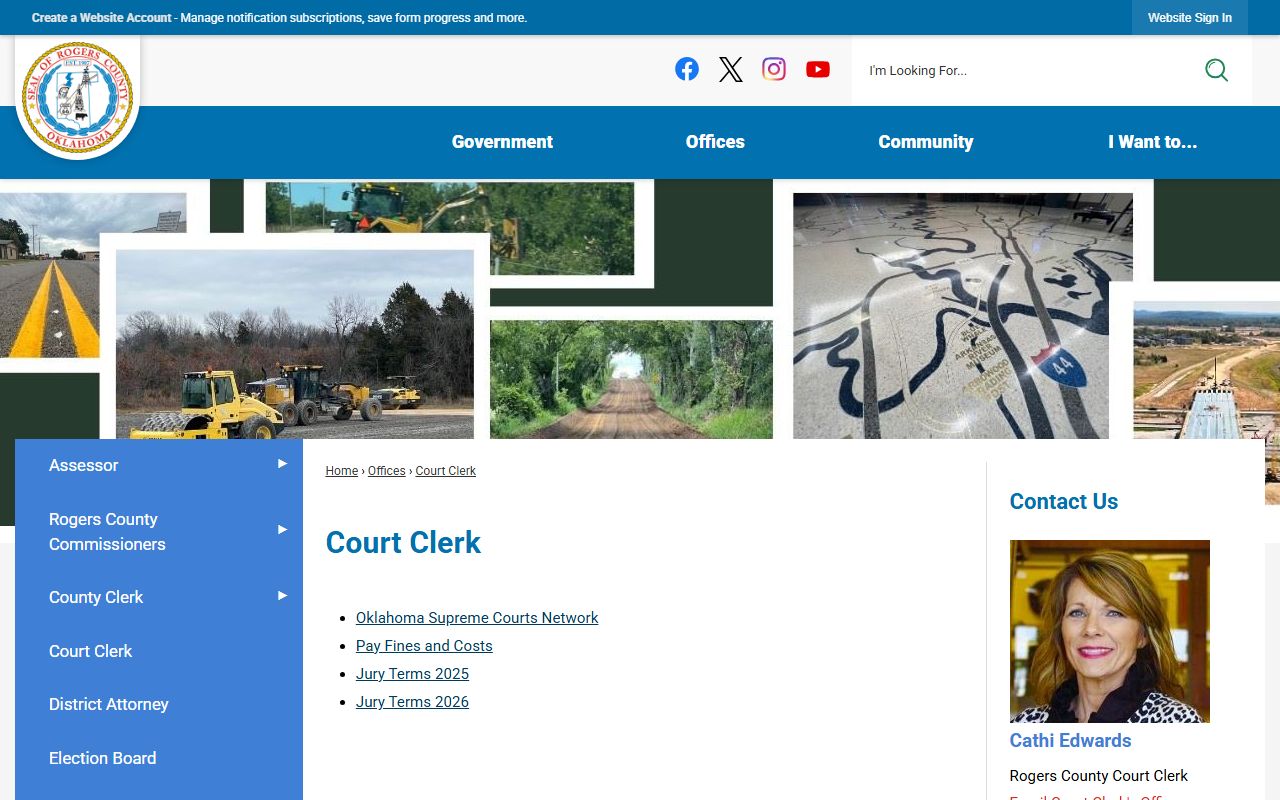
That office keeps the master case files when an online docket is not enough. Counter staff handle certified copies, older files, and documents that never reached the web. Follow the steps below to run a clean search.
- Open the OSCN docket search and choose Rogers County District Court from the court dropdown.
- Enter a case number if you have one, using the correct prefix such as CF, CM, TR, or PB.
- To search by name, type a last name first, then add a first or middle name to narrow results.
- Pick a party type when it helps. Defendant narrows criminal results, while Petitioner or Respondent suits family and probate files.
- Add a filed or closed date range if the list runs long.
- Open the docket to view filings, hearings, bonds, pleas, and the final disposition.
- Pay eligible fines and costs through OSCN e-payments, or visit the clerk for a certified copy.
The OSCN form offers more than a dozen fields. The table below lists the ones most people use for a Rogers County search.
| Field | Type | Notes |
|---|---|---|
| County or Court | Dropdown | Select Rogers County District Court to avoid statewide results. |
| Case Number | Text | Exact number, such as CF-2024-100 or PB-2026-10. |
| Last Name | Text | Main party search field. |
| First / Middle Name | Text | Optional, narrows common names. |
| Party Type | Dropdown | Defendant, Plaintiff, Petitioner, Respondent, Attorney, and more. |
| District Court Case Type | List | Criminal Felony, Misdemeanor, Probate, Family, Traffic, Small Claims. |
| Cases Filed / Closed Dates | Date | Filter by filed-after, filed-before, closed-after, closed-before. |
| Citation Number | Text | District Court traffic only; it does not search municipal tickets. |
Note: OSCN does not search city tickets, so municipal citations from Claremore, Catoosa, or Chelsea must be checked through each city court portal.
The Rogers County Judicial System
Oklahoma builds its trial work around District Courts. District judges hear both civil and criminal matters, which makes the District Court the busiest level for local cases. Rogers County District Court sits in Judicial District 12, grouped with Craig and Mayes Counties. Two district judges, Stephen Pazzo and Lara Russell, preside in Claremore, joined by associate and special judges. Below the District Court, municipal courts handle city ordinance cases. Above it, two high courts split the appeals.
The state explains its trial structure on the Oklahoma District Courts overview, which confirms that district judges carry most of the caseload. Civil appeals climb to the Oklahoma Supreme Court, while criminal appeals go to the Oklahoma Court of Criminal Appeals.
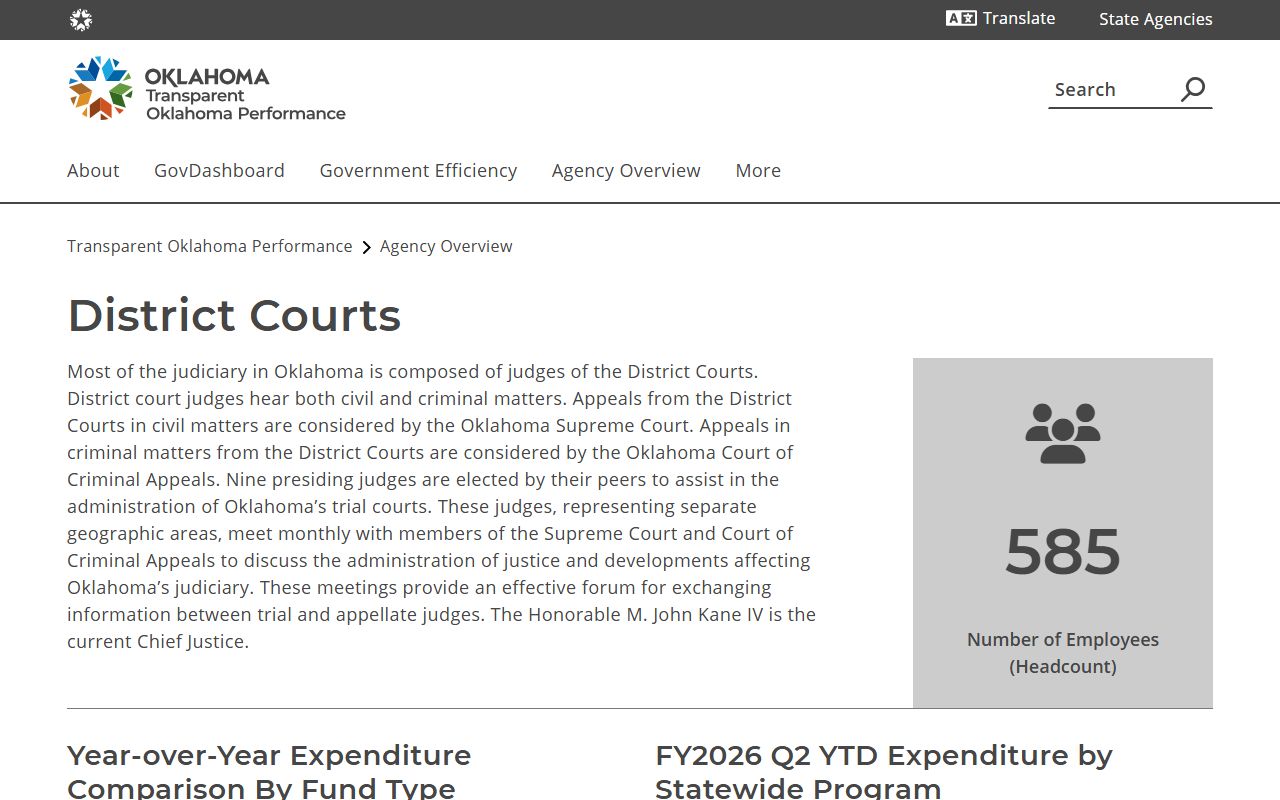
That split matters for anyone tracing a case past the trial stage. A felony appeal and a contract appeal follow different roads even when they start in the same Claremore courtroom.
Case flow: Municipal Court › District Court › Oklahoma Supreme Court (civil) or Oklahoma Court of Criminal Appeals (criminal)
| Court | Jurisdiction | Case Types |
|---|---|---|
| Oklahoma Supreme Court | Highest civil court | Civil appeals, supervisory matters |
| Court of Criminal Appeals | Final criminal court | Felony and misdemeanor appeals |
| Rogers County District Court | Primary trial court | Criminal, civil, family, probate, traffic |
| Municipal Courts | City ordinance level | City citations, municipal bench warrants |
District Court and municipal court are easy to confuse, yet they hold different files. The comparison below shows where each type of case lives.
| Point | District Court | Municipal Court |
|---|---|---|
| Charges | State and county offenses | City ordinance violations |
| Records held by | Rogers County Court Clerk | Each city court clerk |
| Online search | OSCN docket search | City payment portals |
| Traffic stops | Sheriff and Highway Patrol tickets | City police tickets |
Types of Court Records in Rogers County
The District Court produces a wide range of records, and each case type uses its own prefix. Civil files cover lawsuits, debts, and property disputes. Criminal files run from minor misdemeanors to serious felonies. Family files include divorce, custody, and support. Probate handles wills, estates, and guardianships. Traffic cases filed by county or state officers also land in District Court.
Knowing the category helps you choose the right filter on OSCN. The list below maps the main record types found in Rogers County.
- Criminal records show charges, pleas, bonds, disposition, and sentence under CF and CM cases.
- Civil records include petitions, answers, judgments, garnishments, and liens under CJ and CV cases.
- Family and divorce records hold decrees, custody orders, and support terms under FD cases.
- Probate records contain wills, letters, inventories, and final accountings under PB cases.
- Traffic records cover citations and dispositions for state and county stops under TR cases.
Federal cases are separate from the county system. Rogers County sits in the United States District Court for the Northern District of Oklahoma, which holds court in Tulsa. The court explains its reach on the Northern District federal court overview.
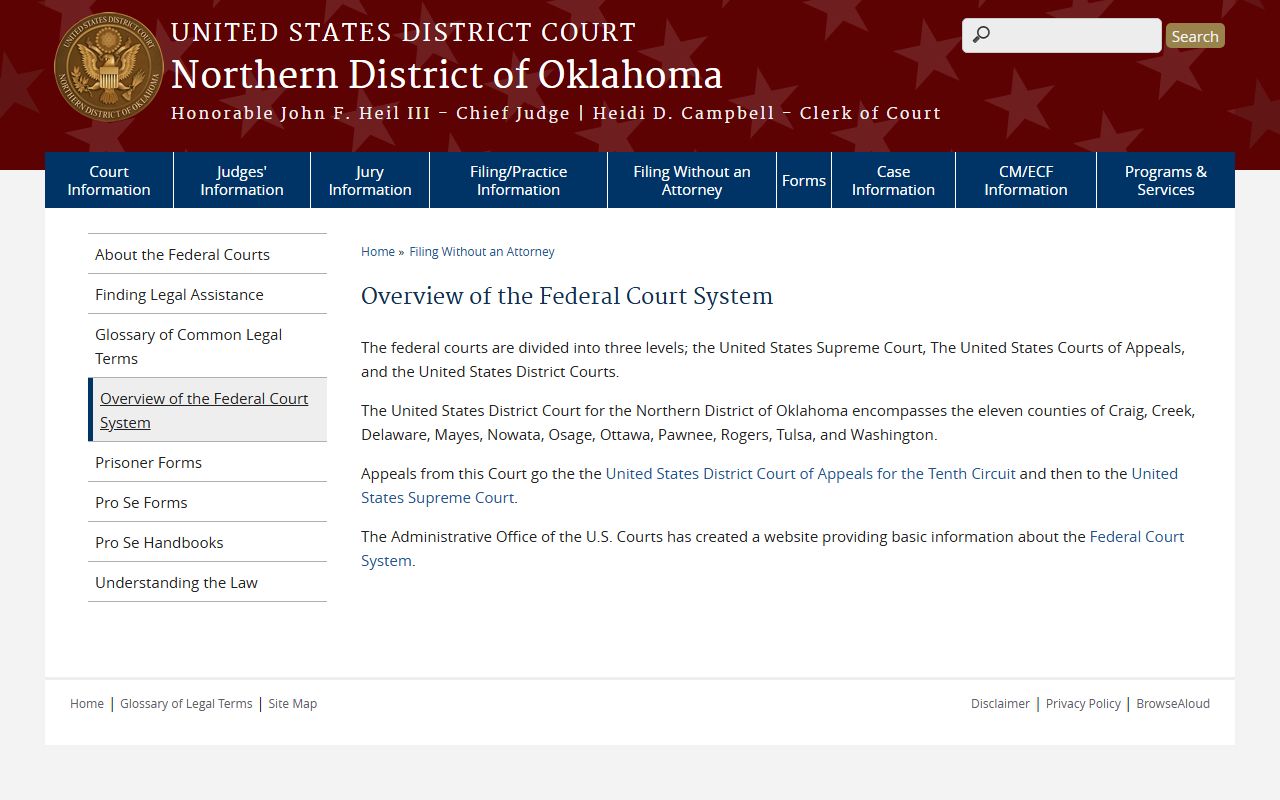
Federal crimes, bankruptcy, and federal civil suits never appear on OSCN, so those records call for the federal PACER system instead. The county clerk and court clerk cannot pull a federal file.
What Rogers County Court Records Show
A Rogers County docket reads like a timeline. It opens with the case number and the parties, then lists each event in order. Filings, appearances, bonds, pleas, motions, orders, and the disposition all appear as dated lines. Financial fields track fines, costs, restitution, and any outstanding balance. Hearing rows show the date, time, and judge once they are set.
Some content stays off the public view. Social Security numbers, driver license numbers, and minor names are redacted. Full document images may require a trip to the clerk. The table below breaks down the core fields.
| Field | What It Shows |
|---|---|
| Case Number | Prefix, year, and number, such as CF-2026-45. |
| Filing Date | When the case opened with the Court Clerk. |
| Parties | Plaintiff, defendant, petitioner, respondent, and attorneys. |
| Charges / Cause | The filed offense or the civil claim. |
| Disposition | The final outcome of each count or claim. |
| Sentence / Judgment | Penalty, probation terms, or money awarded. |
Note: Online dockets list events, but the official paper file at the Court Clerk controls if the website and the record ever disagree.
Reading a Rogers County Docket
Docket lines use short legal terms that trip up first-time readers. A charge is not a conviction. An arraignment is only the first appearance, not the outcome. A deferred sentence delays punishment under set conditions, while a suspended sentence is held back as long as those terms hold. Learning a handful of words makes the whole file readable.
The terms below appear across criminal, civil, and family dockets in Rogers County.
- Information
- The prosecutor's formal criminal charging document.
- Disposition
- The final outcome of a charge or claim.
- Bond
- Money or conditions that allow release while a case is pending.
- Bench warrant
- A warrant a judge issues, often for failure to appear.
- Restitution
- Money the court orders a defendant to repay a victim.
- Continuance
- A hearing moved to a later date.
A dismissal can read two ways. Dismissed with prejudice ends the matter for good. Dismissed without prejudice leaves the door open to refile.
Public Access to Rogers County Records
Oklahoma treats court records as public by default. The Open Records Act requires public bodies to release records unless a specific law makes them confidential. Records stay open for inspection and copying during business hours, with narrow exceptions. A judge may seal pleadings through a protective order when privacy or safety is at stake. The online docket is a convenience, not the official record itself.
Several statutes shape how Rogers County files reach the public. The callout below pairs each one with a plain reading.
Key Statutes:
Oklahoma Code Title 51 § 24A.1 et seq. - The Open Records Act keeps public records open unless a law makes them confidential.
Court of Criminal Appeals Rule 2.6 - OSCN online search is a public convenience, and the official court record controls any conflict.
Oklahoma Code Title 22 § 18 - Eligible people may petition to expunge a criminal record under set conditions.
Oklahoma Code Title 58 § 1 - The District Court holds probate jurisdiction over wills and estates.
For most needs, start on OSCN and limit the court to Rogers County. Use the Court Clerk for certified copies, old files, and documents that are not online.
Restricted and Confidential Records
Not every case is open to the public. Juvenile files, including delinquent and deprived matters, carry tight access limits. Adoption records are sealed by statute. Mental health proceedings hold sensitive treatment data. Sealed and expunged cases may show only limited details or drop from search results entirely. Personal identifiers like account numbers and victim addresses are redacted where the law requires.
Sealing a record takes a court order, not just time. A person first checks whether the situation fits a Title 22 expungement category, then files a petition in the court that handled the case. Law enforcement and prosecutors usually receive notice. If a judge grants relief, the order routes to the Court Clerk, the state bureau of investigation, and the arresting agency. Paying a fine or finishing probation does not seal a record on its own.
Note: A dismissed or deferred charge can stay visible on public search until a sealing or expungement order is entered and processed by every agency.
Specialty Courts in Rogers County
Rogers County and the wider District 12 run several problem-solving courts. These programs trade jail time for structured treatment and close court supervision. Drug Court serves eligible non-violent felony defendants with substance use issues. The Anna McBride Mental Health Court works with defendants who have behavioral health needs. Veterans Court supports veterans whose cases tie back to service-related struggles.
The District 12 District Attorney's office staffs these dockets and prosecutes serious crimes across the three counties. Its team is described on the District 12 District Attorney page, led by District Attorney Matt Ballard. Cases in these courts still live in the District Court record, even though the program adds extra reviews and conditions.
Rogers County Sheriff and Jail
The Rogers County Sheriff's Office handles arrests, civil process, warrants, and the county jail. Sheriff Scott Walton leads the office, and the agency runs the Amos G. Ward Detention Center in Claremore. The jail posts a public roster of current inmates and a separate list of people released in the last 48 hours. Each roster entry can link to the matching OSCN case.
The agency's full menu of records, warrants, and detention pages lives on the Rogers County Sheriff homepage. Booking, bond, and visitation details all branch from there.
Bond is not always set at booking. Paperwork reaches the courthouse first, and a judge often sets the amount around 4 p.m. For the full roster, booking fields, and visitation rules, see the Rogers County inmate records page.
Warrants and Failure to Appear
The Sheriff's Warrants and Transportation Division tracks county warrants and moves inmates between facilities. The division reports a database of more than 10,000 active warrants. There is no full public name-search portal for warrants, so confirmation comes by phone, by email, or in person. OSCN may show a warrant as a docket event, but a docket line is not a live warrant check.
Municipal courts add their own bench warrants. Claremore issues a bench warrant when a person skips court without paying a fine. Those city warrants may never appear in county warrant materials.
Important: Paying a fine through OSCN e-payments does not automatically recall a warrant. Contact the Court Clerk after payment to confirm the warrant is cleared.
For the warrant types, the division phone line, and step-by-step help, see the Rogers County warrant records page.
Rogers County Marriage and Probate Records
Marriage licenses and divorce files run through the Court Clerk, not the county land office. Divorce records sit under the Family and Domestic case type on OSCN, complete with decrees and support orders. Sensitive financial and child-related material may be redacted. Marriage license records appear under their own case type, and certified copies come from the Court Clerk counter.
Probate is handled by the Probate Division of the District Court, since Oklahoma gives the District Court probate jurisdiction. A probate file can hold the will, letters testamentary, the estate inventory, creditor notices, and the final decree. The terms below come up often in probate matters.
- Testator
- A person who makes a valid will.
- Executor
- The person named to carry out a will.
- Intestate
- Dying without a valid will.
- Conservator
- A person appointed to manage another adult's affairs.
Note: Marriage and divorce certified copies come from the Court Clerk, while historical marriage indexes for genealogy may exist through the state historical society.
County Clerk Recording Fees
The Rogers County Court Clerk and the Rogers County County Clerk are two different offices. The Court Clerk keeps court case files. The County Clerk records deeds, mortgages, plats, and liens for the land records system. The fee table below reflects the County Clerk recording schedule, not court case filing fees, which were not published online.
County Clerk duties and the recording office appear on the Rogers County County Clerk page, led by Jeanne Heidlage.
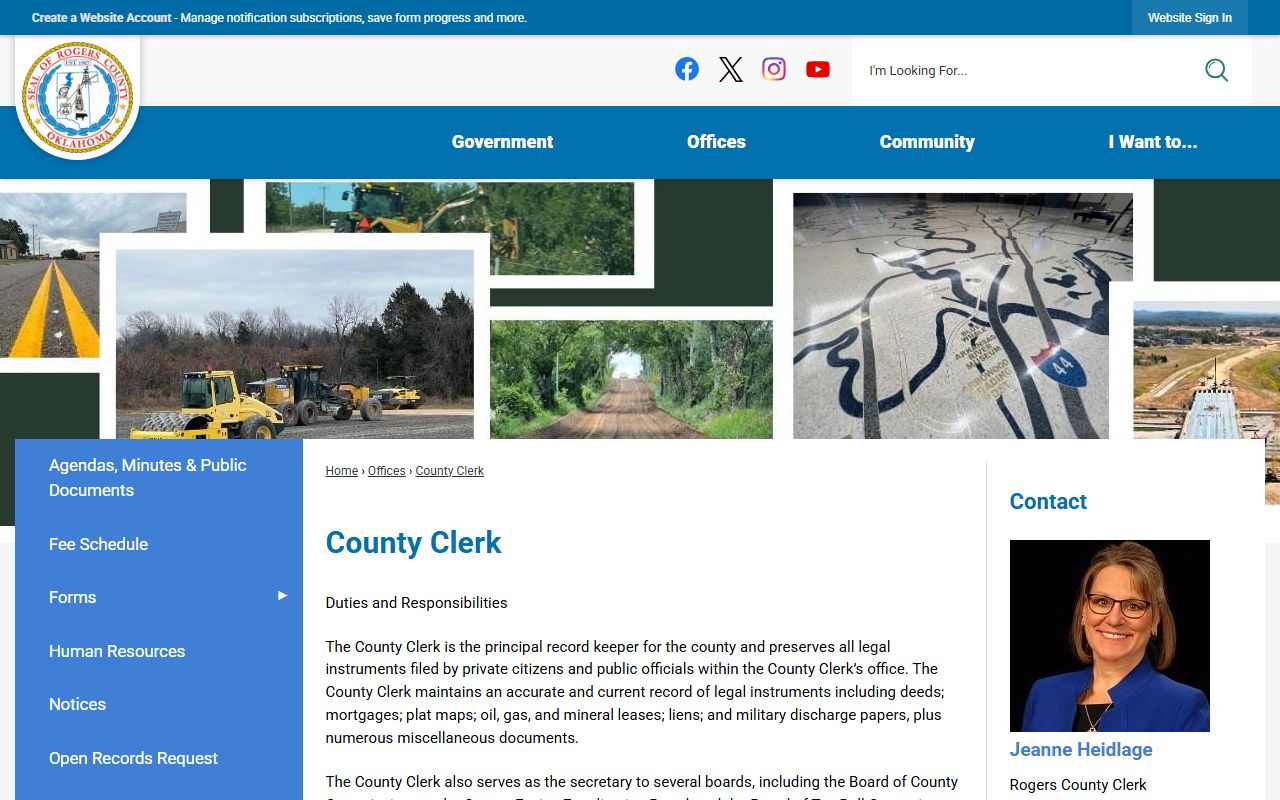
These fees apply when you record or copy a document at the County Clerk counter. Court case copies are requested from the Court Clerk instead.
| Item | Amount |
|---|---|
| Deeds, mortgages, recorded documents | $18.00 |
| Additional pages of same instrument | $2.00 per page |
| Paper copy of documents | $1.00 per page |
| Certification from County Clerk | $1.00 |
| Plat of one block | $20.00 |
| Plat of more than one block | $35.00 |
| Nonconforming document | $35.00 plus $10.00 per page |
Rogers County Court History
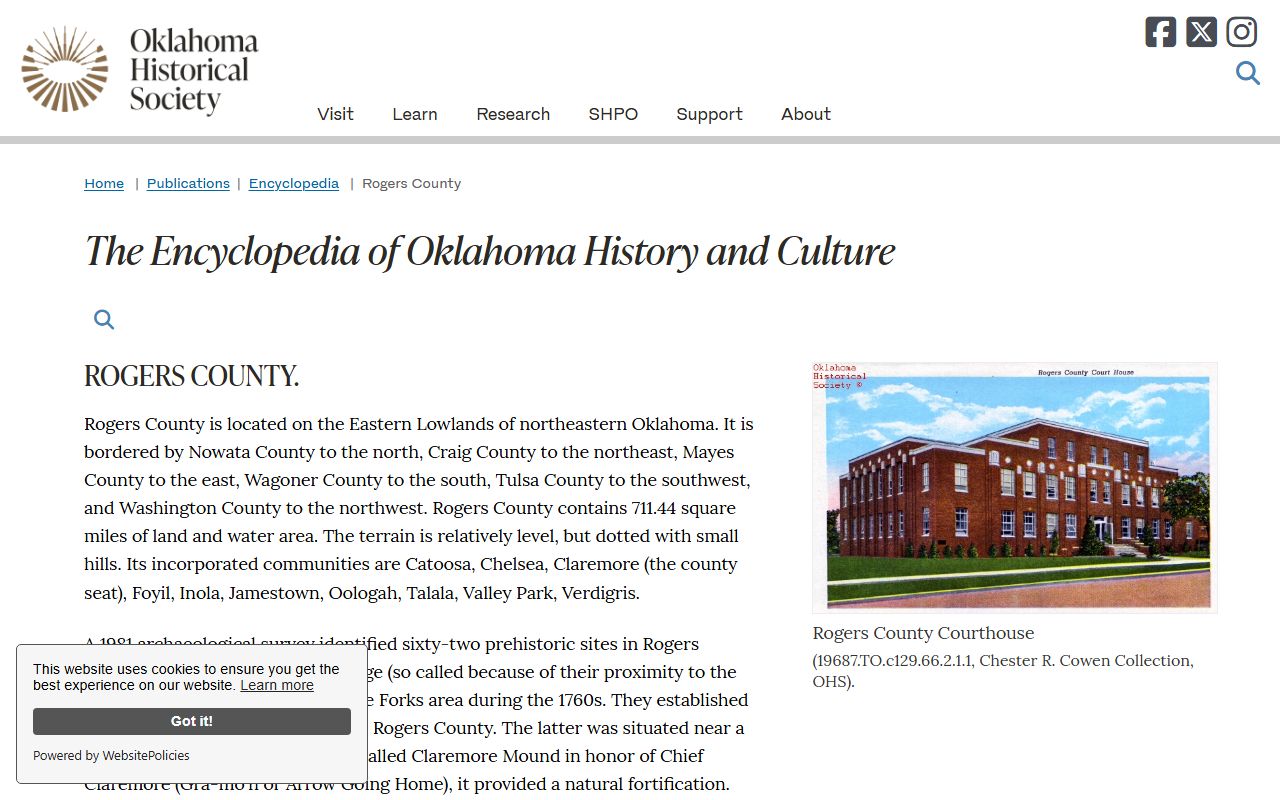
Rogers County started under a different name. The Constitutional Convention first designated it Cooweescoowee County. Residents protested, and the name changed to honor Clement Rogers. Claremore was chosen as the county seat, which is why every major county court file routes there today.
Work on the present courthouse began in 1937. The building still anchors downtown Claremore near the Route 66 corridor and the Will Rogers identity. The county's founding story is told in the Oklahoma Historical Society Rogers County entry.
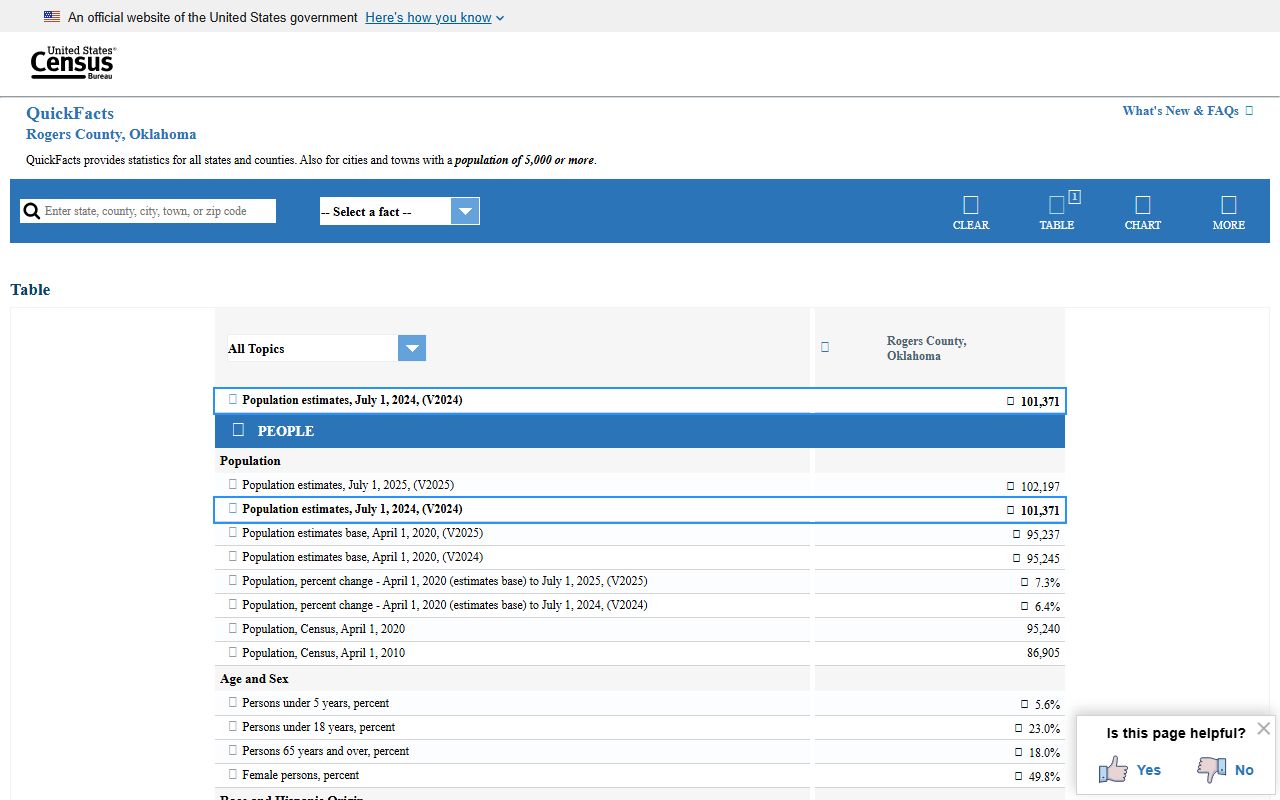
The county has grown fast in modern times. Recent figures from the Census QuickFacts for Rogers County put the population above 100,000.
That growth feeds a steady court caseload. Suburban Tulsa commuters, rural residents, and Route 66 traffic all pass through the same Claremore courthouse.
Rogers County Courthouse Contact
The Rogers County Courthouse holds the District Court, the Court Clerk, the County Clerk, and the District Attorney's office. The Court Clerk keeps court hours of 8 a.m. to 5 p.m. and answers case-date questions. The county footer and main contact details sit on the Rogers County official website.
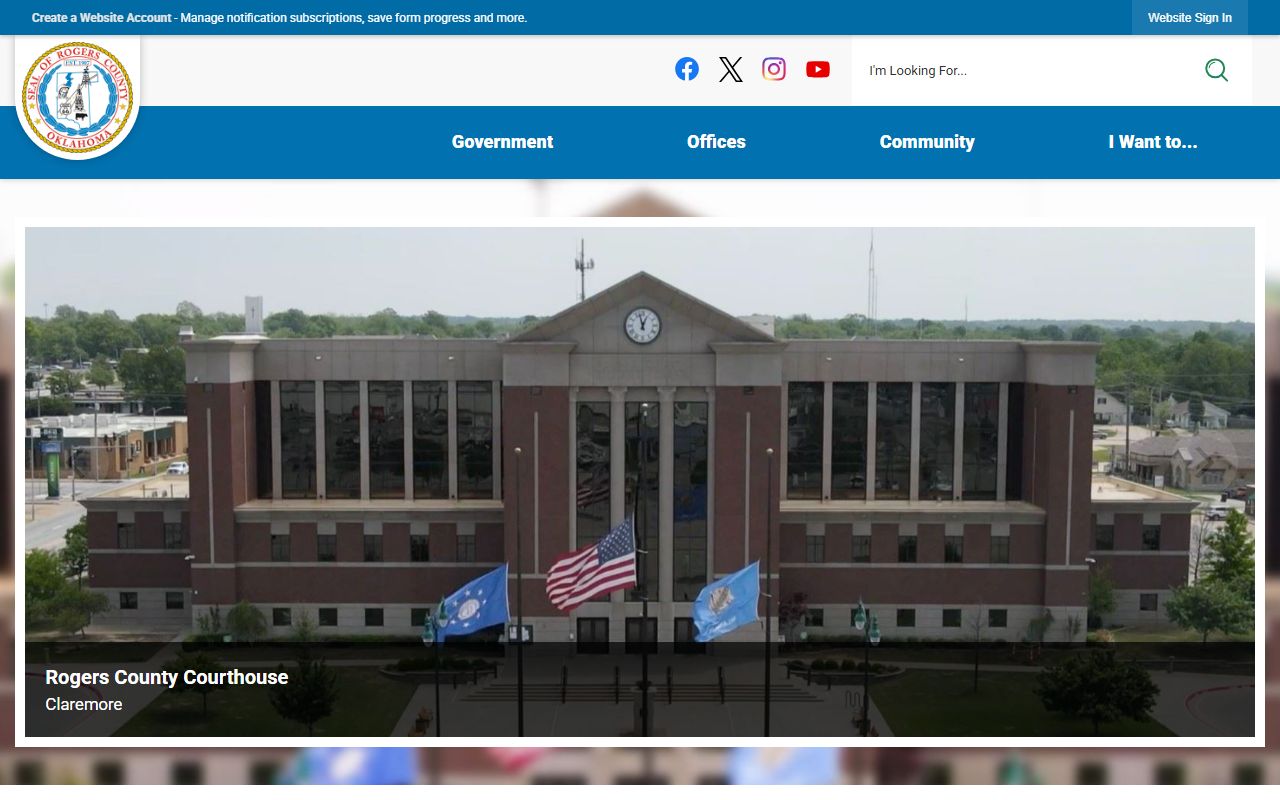
Call the right office for the right record. The Court Clerk handles court cases, while the County Clerk handles land and county records.
Rogers County Court Clerk
200 S. Lynn Riggs Blvd.
Claremore, OK 74017
918-923-4961
Hours: 8 a.m. to 5 p.m.
Rogers County Clerk
200 S. Lynn Riggs Blvd.
Claremore, OK 74017
918-923-4796
Land and county records
District Attorney, District 12
200 S. Lynn Riggs Blvd., 2nd Floor
Claremore, OK 74017
918-923-4960
Main county line: 918-923-4400
Frequently Asked Questions
How do I search Rogers County Court records online?
Use the OSCN docket search and select Rogers County District Court. Search by case number if you have one, or by last name with a first name to narrow the list. You can also filter by case type and by filed or closed dates. City tickets are not on OSCN, so check the Claremore, Catoosa, or Chelsea court portals for those.
Are Rogers County court records public?
Yes. Oklahoma's Open Records Act treats court records as public unless a law makes them confidential. Most dockets are open for inspection and copying. Sealed, juvenile, adoption, and mental health files carry limits, and personal identifiers are redacted. A judge can also seal specific pleadings through a protective order.
What is the difference between the Court Clerk and the County Clerk?
The Court Clerk keeps District Court case files, fines, dockets, marriage licenses, and probate. The County Clerk records deeds, mortgages, plats, and liens for the land records system. For a court case copy, contact the Court Clerk. For a recorded land document, contact the County Clerk.
Where do traffic tickets get handled in Rogers County?
It depends on who wrote the ticket. A citation from a Sheriff's deputy or the Highway Patrol goes to the District Court at the courthouse. A city police ticket goes to that city's municipal court. Call the Court Clerk at 918-923-4961 to confirm a District Court traffic date.
Can I pay a fine online?
OSCN e-payments accept payment on many disposed criminal, traffic, and wildlife cases, plus court payment plans. Not every case qualifies, and a payment can take a day or two to post. Paying a fine does not recall a warrant on its own, so confirm with the Court Clerk afterward.
How do I look up a Rogers County inmate?
The Sheriff's Office posts a public roster for the Amos G. Ward Detention Center. It lists current inmates and recent releases, and many entries link to the matching court case. The roster is provided for convenience and is not certified, so verify booking and bond details with the jail or the Court Clerk.