
Rogers County Arrest Records and Court Charges
An arrest record is the account of the arrest itself. It names the person taken in, the arresting agency, the booking date, and the offense an officer listed at the time. In Rogers County, the Sheriff's Office books people into the Amos G. Ward Detention Center, also called the Rogers County Detention Center. That booking is the arrest side. A court charge record is different. It begins when the District Attorney files a formal charge with the Court Clerk at the courthouse in Claremore. From that point the charge moves through the case.
Think of the two records as two stops on one road. The arrest and booking detail sits on the jail roster, where the full Rogers County inmate records list booking dates, bond, and the offenses an officer logged. The court charge record sits on the case docket, where the charges a prosecutor actually filed move forward. Court charges after arrest can match the booking offense, or they can change. The complete case file, with pleas, hearings, and the final outcome, lives in the Rogers County criminal court records.
The Rogers County Sheriff publishes the booking side through its inmate roster page, which embeds a live list of people in custody.
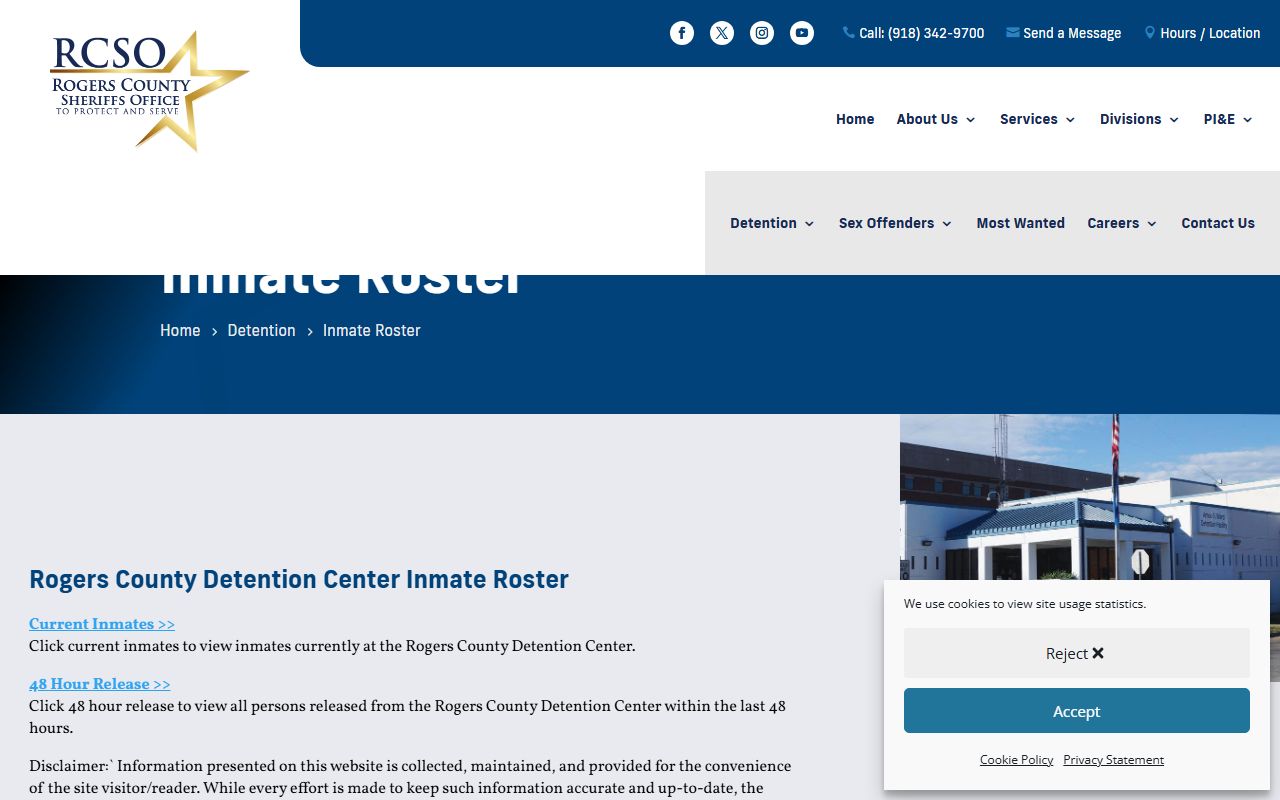
That roster is the arrest record entry point, while the charges that follow show up later on the court docket.
How to Find Rogers County Arrest Records
Most filed charges in Rogers County run through one free portal. The Oklahoma State Courts Network, known as OSCN, hosts the District Court docket search. A charge record there lists the case number, the counts filed, bond, and each charge's current status. The arrest and booking detail is not on OSCN. That detail lives on the jail roster instead.
- Open the OSCN docket search and set the court to Rogers County District Court so results stay local.
- Search by the defendant's last and first name, or enter the case number if you have it.
- Open the case and read the charge list, where each count is named in order.
- Check each charge's code, severity level, and current status before you draw a conclusion.
The booking detail lives on the Rogers County Detention Center roster landing page, which splits into a current-inmate list and a recent-release list.
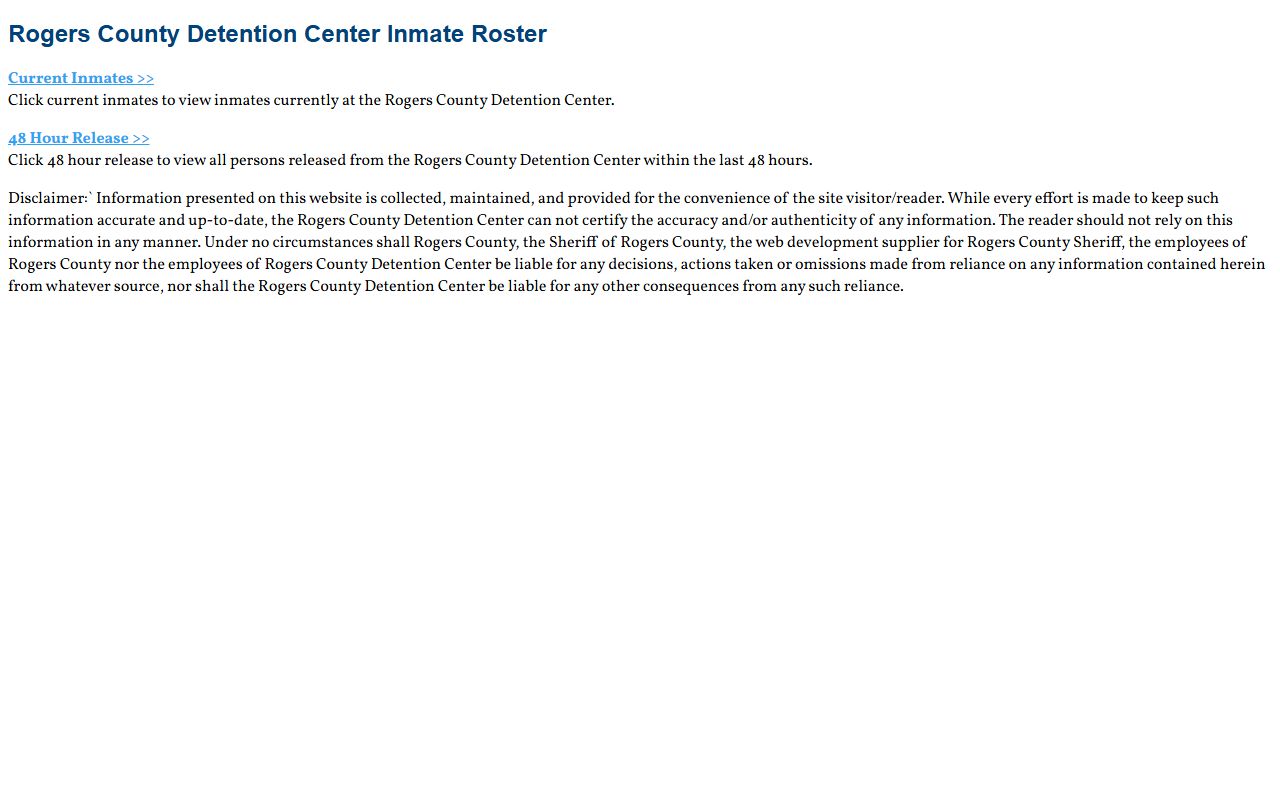
From the roster a reader moves to the court side, since each booked offense can be matched to a filed charge once the prosecutor acts.
Who Files Rogers County Charges After Arrest
In Rogers County the District Attorney decides the charges. The office is District 12, led by District Attorney Matt Ballard, and it serves Craig, Mayes, and Rogers Counties. The Rogers County office sits on the second floor of the courthouse at 200 S. Lynn Riggs Boulevard in Claremore. Assistant district attorneys handle the day-to-day filings, from serious felonies to juvenile cases and the district's alternative courts.
An arrest does not lock in the charge. After the Sheriff or a city officer books someone, the report goes to the prosecutor. The District Attorney can file the offense the officer listed, file a different charge, add counts, or decline to file at all. That review is why a booking offense and the filed charge sometimes do not match. The Oklahoma District Attorneys Council District 12 page lists the office address, phone, and the payment programs it runs.
City charges follow a separate track. When a Claremore, Catoosa, or Chelsea police officer writes a citation under a city ordinance, the case goes to that city's municipal court, not to the District Attorney. So a person can have a county charge filed by the DA and a city charge filed by a municipal prosecutor at the same time. Each one shows up in its own system, and each one moves on its own schedule.
How Rogers County Charges Get Filed
A charge record begins with a charging document. That document names each offense, cites the statute, and tells the court who is accused. Oklahoma uses three main types. Which one applies depends on the offense and how the case reaches the court.
| Complaint | Information | Indictment | |
|---|---|---|---|
| Filed By | Officer / Prosecutor | Prosecutor | Grand Jury |
| Common For | Misdemeanors | Many felonies | Serious felonies |
| Starts | The case | The case | The case |
Note: In Oklahoma most felony cases move forward on an Information filed by the District Attorney rather than on a grand jury indictment.
Charges on the Rogers County Jail Roster
The jail roster does more than list names. Each booked person has an offense grid that ties the arrest to the charges. The grid shows the offense description, the bond type, the bond amount, the disposition, and the case number. The case number is the bridge. It links straight to the matching District Court case on OSCN.
The current inmate roster lists everyone held at the detention center right now.
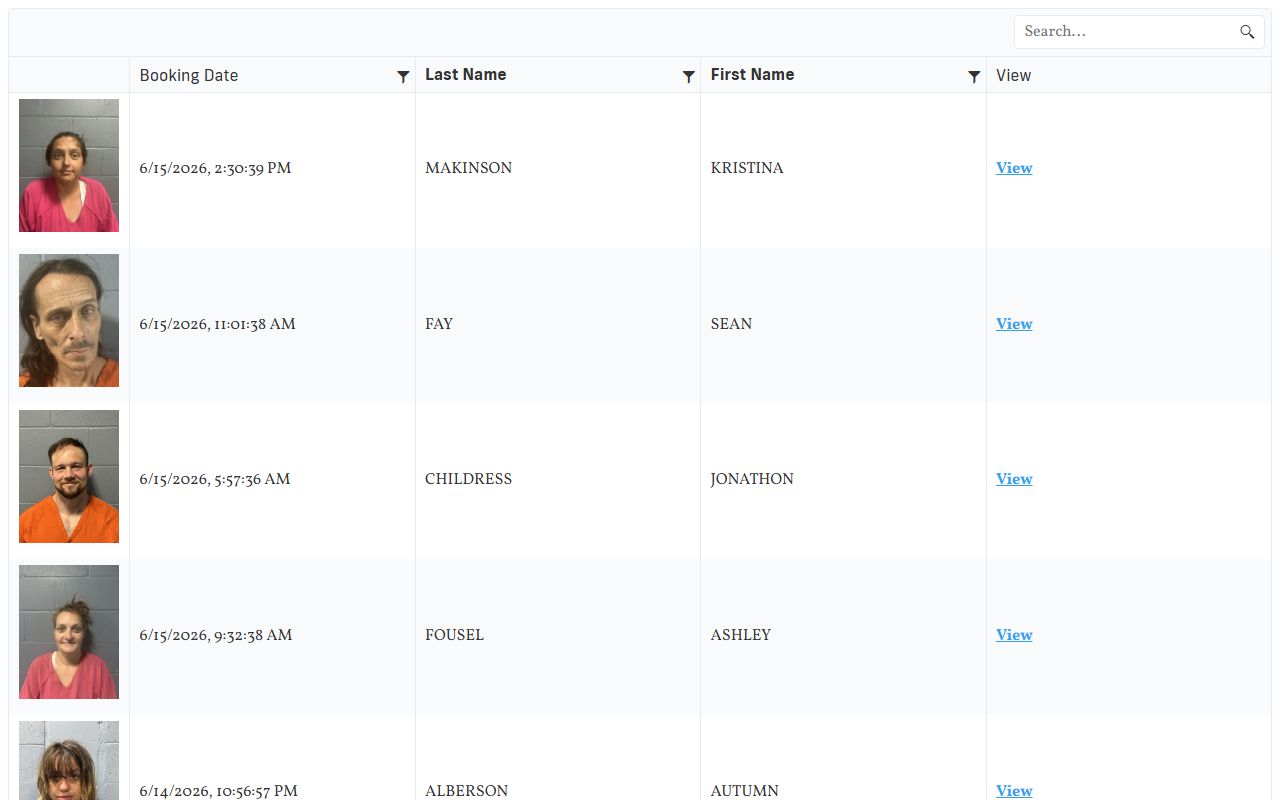
Open a person's detail page and the offense grid spells out each charge and its bond.
A second list covers recent releases. People booked and let go inside two days still leave an arrest record, even when no charge sticks. That list helps when someone was in and out fast.
The 48-hour release roster shows people freed within the last two days.
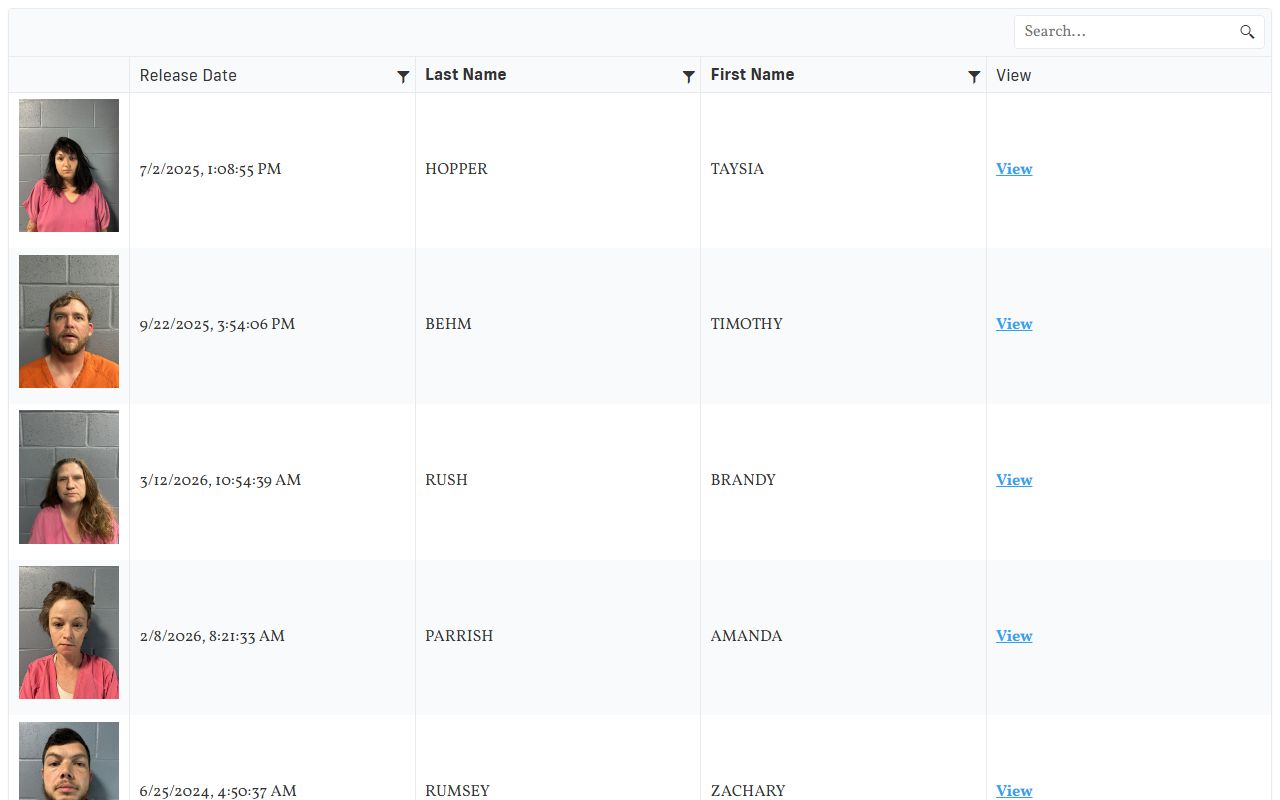
Either list points the reader toward the case number needed to pull the filed charges on OSCN. The roster is a convenience copy. The detention center does not certify it, so the court docket remains the record to trust for charges.
Rogers County Charge Status Terms
Charges rarely sit still. As a case moves, the District Attorney can amend a charge, reduce it, add a count, drop it, or dismiss it. The docket records each change. Reading the status tells you where a charge stands today, not where it started.
| Status | What It Means |
|---|---|
| Pending | The charge is filed and the case is still open, with no final outcome yet. |
| Amended / Reduced | The prosecutor changed the charge, often to a lower level or a different offense. |
| Dropped | The prosecutor chose not to pursue a count, sometimes as part of a plea deal. |
| Dismissed | The court ended the charge, either with prejudice (no refiling) or without. |
| Nolle Prosequi | The prosecutor's formal choice not to proceed on the charge. |
Rogers County Charge Codes and Severity
Every charge ties to a statute. The charging document cites the exact code section, so the same offense reads the same way across cases. Oklahoma sorts offenses by severity. A felony is the most serious level and can carry prison time. A misdemeanor is less serious and is capped at lighter penalties. Some minor violations are infractions handled with a fine.
One arrest can spin off several charges. A single traffic stop might produce a felony count, a misdemeanor count, and a city ordinance violation all at once. Each count carries its own code, its own level, and its own status. On the docket they line up as separate counts under one case number, and the case prefix signals the type. In Rogers County, CF marks a felony and CM marks a misdemeanor.
Charges vs Convictions in Rogers County
A filed charge is an accusation, nothing more. It means a prosecutor believes there is enough cause to take the case forward. A conviction is the end result, reached only by a plea or a verdict. Many charges never become convictions. Some are reduced, some are dropped, and some end in acquittal.
| Charge | Conviction | |
|---|---|---|
| Stage | Accusation | Verdict or plea |
| Burden of Proof | Probable cause | Beyond reasonable doubt |
| Public Record | Yes | Yes |
Note: A pending charge on the docket does not prove guilt, so read the disposition line before treating any Rogers County charge as a conviction.
Statewide Charge and Criminal History Lookups
County records show what happened in Rogers County. A full criminal history reaches wider. The Oklahoma State Bureau of Investigation keeps the official statewide criminal history. It pulls charges and dispositions from courts across the state into one record, which is why a clean OSCN search in one county does not mean a clean record statewide.
People sentenced to state prison appear in a separate system. The Oklahoma Department of Corrections offender lookup lists those under state supervision. The DOC warns its data is abbreviated and is not a full account of a sentence. For the charge record itself, the OSCN docket search stays the direct source for Rogers County District Court cases.
Each source answers a different question. The jail roster shows who is in custody now. OSCN shows the charges a prosecutor filed and how they stand. OSBI shows the long-term criminal history across Oklahoma. The DOC shows who is serving a state sentence. A complete picture often needs more than one of them, because a single record set rarely tells the whole story of an arrest and the charges that came after it.
Sealed vs Expunged Records
Some charges come off public view. Oklahoma law lets eligible records be sealed or expunged, but the two are not the same. Both need a court order, and neither happens just because a case ended. The Title 22 statutes set the eligibility rules.
- Sealed
- Hidden from general public search, with limited law-enforcement access. Set by Title 22 categories and granted only by court order.
- Expunged
- Treated as if the record never existed, with very limited access. Eligibility is narrower, and OSBI cannot pre-approve it.
Note: Paying a fine or finishing probation does not seal a charge, and a dismissed or deferred count can stay visible until a court grants and processes an expungement.
Background Check Considerations
A casual lookup is not a background check. Reading a charge on OSCN or a name on the roster gives a snapshot, not a vetted report. Employers, landlords, and lenders who screen people must follow the federal Fair Credit Reporting Act. That law sets rules for accuracy, notice, and dispute that a quick search does not meet.
Important: This site is not a consumer reporting agency under the FCRA, and its information cannot be used for employment, housing, credit, or other FCRA-regulated decisions.
Restricted Rogers County Charge Records
Not every charge is open. Juvenile cases are restricted by law and should not be treated as open records. Sealed and expunged charges drop out of public search. Some dismissed counts stay limited, and an active investigation can keep a filing out of view until the charges are public. Personal identifiers like Social Security and driver license numbers are redacted from public copies.
When a charge is sealed, juvenile, or tied to a sensitive case, public access may be limited to redacted copies, the named parties, or those covered by a court order. Municipal charges from Claremore, Catoosa, and Chelsea are filed in city courts and stay separate from the District Court docket.