
Criminal Court Records in Rogers County
A criminal court record is the case file a court keeps once the state files charges against a person. In Rogers County, the Court Clerk opens that file and stores every document and event tied to the case. The file starts with the charging paper. It grows as the case moves through court. Cathi Edwards serves as the Rogers County Court Clerk, and her office at the courthouse on South Lynn Riggs Boulevard in Claremore holds these District Court files. The clerk logs each plea, motion, hearing, and order. By the end, the record shows how the case was resolved and what sentence, if any, the court imposed.
Most criminal cases in the county are heard in the Rogers County District Court, part of Oklahoma's Judicial District 12 with Craig and Mayes Counties. The District Court handles both felony and misdemeanor charges. Felony cases carry the prefix CF, and misdemeanor cases carry CM. City police cases are different. Claremore, Catoosa, and Chelsea each run their own municipal courts for ordinance violations, and those files are not part of the District Court record. For the charges themselves and how they reach the court, the county arrest records and court charges cover the arrest-to-filing path in more detail.
How to Search Rogers County Criminal Records
The main portal for Rogers County criminal cases is the Oklahoma State Courts Network, known as OSCN. The free site lets anyone search District Court cases by name or by case number. Picking Rogers County District Court from the court list keeps the results local instead of statewide.
- Open the OSCN docket search and select Rogers County District Court.
- Search by defendant last name, or enter a known case number such as a CF or CM file.
- Narrow by case type, party type, and filed or closed dates when results run long.
- Open the case to read the docket, the charges, and the disposition.
- Request a certified copy from the Court Clerk when a court-ready document is needed.
State tools fill gaps that the county docket does not. People sentenced to prison appear in the Oklahoma DOC offender lookup, a statewide search for sentenced offenders.
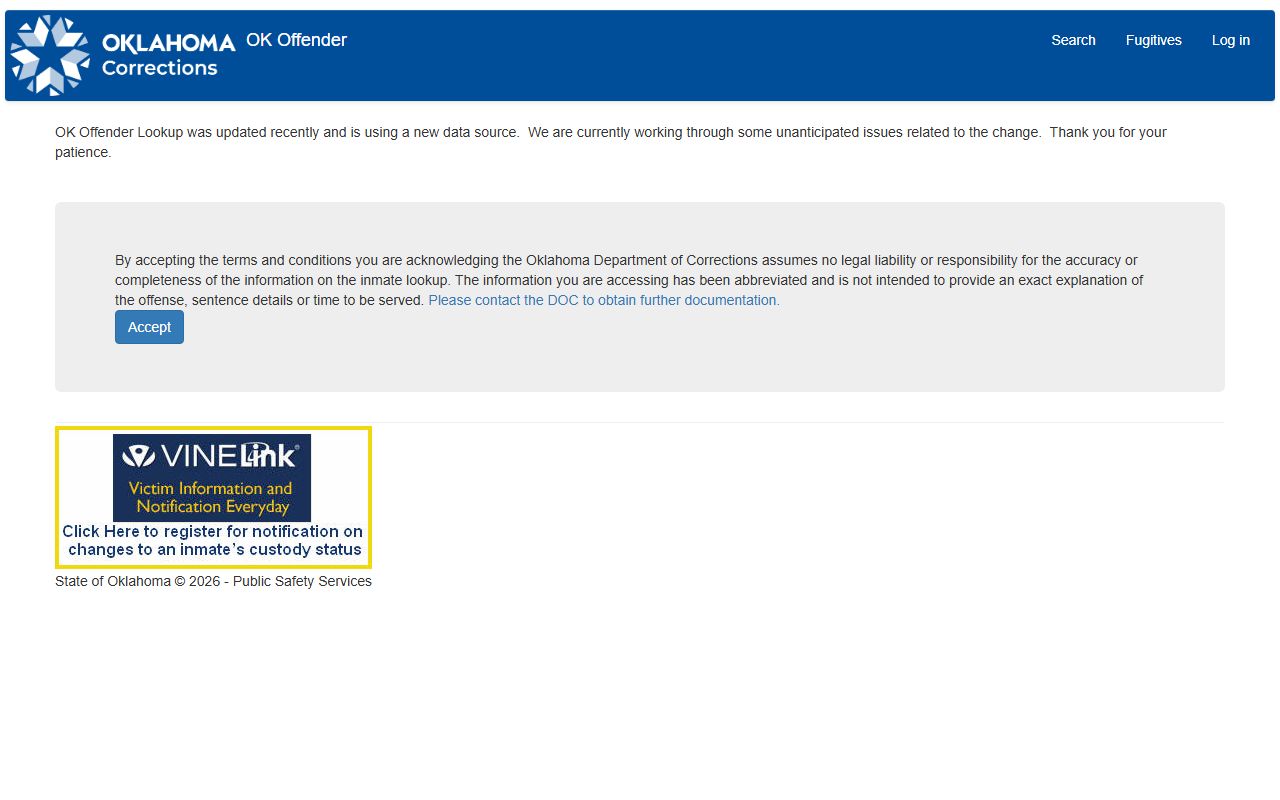
The DOC warns that its data is abbreviated and not a full sentence explanation, so the OSCN case file stays the better source for charges and sentence detail. The two tools work best together, with the county docket showing the case and the state lookup showing custody status.
Stages of a Rogers County Criminal Case
A criminal case moves through set stages, and the record grows at each one. The path starts when the district attorney files charges. It ends with a disposition and, for a conviction, a sentence. Every step leaves a docket entry that the public can read.
Case flow: Charges Filed › Arraignment › Pretrial / Motions › Plea or Trial › Disposition › Sentencing
| Stage | What Happens |
|---|---|
| Arraignment | The defendant first appears, hears the charges, and enters a plea of guilty, not guilty, or no contest. |
| Pretrial / Motions | Both sides trade evidence and file motions. The judge sets bond, rules on requests, and schedules hearings. |
| Plea or Trial | Many cases end in a plea deal. Others go to trial, where a judge or jury decides guilt. |
| Sentencing | After a guilty plea or verdict, the judge orders the sentence, such as jail, probation, fines, or restitution. |
What a Rogers County Criminal Record Shows
Each criminal file is built from standard fields. Reading them in order tells the story of the case. The same fields appear whether the matter is a minor misdemeanor or a serious felony, which makes the docket easy to follow once the labels are clear.
| Field | What It Shows |
|---|---|
| Case Number | The prefix, year, and number, such as CF-2026-100 for a felony or CM-2026-25 for a misdemeanor. |
| Defendant | The person charged, listed against the State of Oklahoma as the opposing party. |
| Charges | Each count, with the offense description and the statute the state says was broken. |
| Plea | The defendant's response to each count, entered as guilty, not guilty, or no contest. |
| Disposition | The outcome of each count, such as convicted, dismissed, or acquitted. |
| Sentence | What the court ordered after a conviction, including jail time, probation, fines, and restitution. |
Charges vs. Convictions
A charge is only an accusation. A conviction is a finding of guilt. The two are not the same, and a criminal court record can show charges that never became convictions. Counts get dropped, dismissed, or end in acquittal. Reading the disposition for each count is the only way to know what truly happened in the case.
Treat an open charge with care. The case may still be pending, and the law presumes the person innocent until a court rules otherwise.
| Charge | Conviction | |
|---|---|---|
| Stage | Accusation | Verdict or plea |
| Burden of Proof | Probable cause | Beyond reasonable doubt |
| Public Record | Yes | Yes |
Reading Rogers County Dispositions and Sentences
The disposition line carries the most weight in a criminal file. Common entries include guilty, not guilty, dismissed, and nolo contendere, which means no contest. A deferred sentence is also common in Oklahoma. The judge delays judgment while the person meets set conditions, and the case can later be dismissed if those terms are met.
A sentence can mix several parts. The court may order jail or prison time, then suspend part of it, or place the person on probation. Fines, court costs, and restitution to a victim often appear as well. A suspended sentence is not served as long as the person follows the rules. Watch for terms like deferred, suspended, and probation, since each one changes what the person must do after the case closes.
Note: A deferred or dismissed charge can stay visible on the docket until a court grants and processes a sealing order, so old cases may still surface in a search.
District Attorney and Public Defender
The state side of every felony and misdemeanor case is run by the district attorney. Rogers County sits in District 12, where Matt Ballard serves as district attorney for Craig, Mayes, and Rogers Counties. His office decides which charges to file, what plea deals to offer, and how to argue each case. The DA office sits on the second floor of the Claremore courthouse.
Defendants who cannot afford a lawyer may get one through the state. The Oklahoma Indigent Defense System, or OIDS, covers Rogers and Mayes Counties from a Claremore satellite office on East State Highway 20. An appointed defense lawyer files motions, negotiates pleas, and represents the person at trial. The lawyers for both sides appear in the case record as parties to the file.
Bond and the Rogers County Criminal Record
Bond is set by a judge, and it shapes how a case begins. When someone is booked into the Rogers County jail on a new charge, the paperwork travels to the courthouse and waits for a judge to set the bond amount. Jail staff often do not get that figure until around 4 p.m. All court is held at the courthouse, not the jail, and that includes video court. The case file logs the bond, any changes to it, and whether the person made bail.
Bond entries and warrant events sit on the same docket as the charges. A missed court date can trigger a bench warrant, which then shows in the file. These events appear next to every other filing in the broader set of Rogers County court records, which tie the bond, the charges, and the outcome into one case history.
Alternative Courts in Rogers County
Not every case ends in standard sentencing. Rogers County and District 12 run several problem-solving courts for people whose crimes tie to addiction or mental health. These programs trade close supervision and treatment for a chance to avoid prison time.
- Drug Court: a structured, court-supervised treatment track for eligible non-violent felony defendants.
- Veterans Court: a program for veterans whose conduct links to service-related substance use or mental health needs.
- Anna McBride Mental Health Court: a court for eligible defendants with behavioral-health needs, built on treatment and regular review.
A case in one of these courts still lives in the District Court record. The docket shows the referral, the review hearings, and the final result the same way it would for any other case.
Sealed vs. Expunged Records
Some criminal records can be hidden or erased, but the two paths differ. A sealed record is hidden from general public view, though some agencies keep limited access. An expunged record is treated as if it never existed. Oklahoma sets the rules under Title 22, and a judge must sign an order before either one happens.
The state crime bureau explains the steps on its OSBI criminal history expungement page.
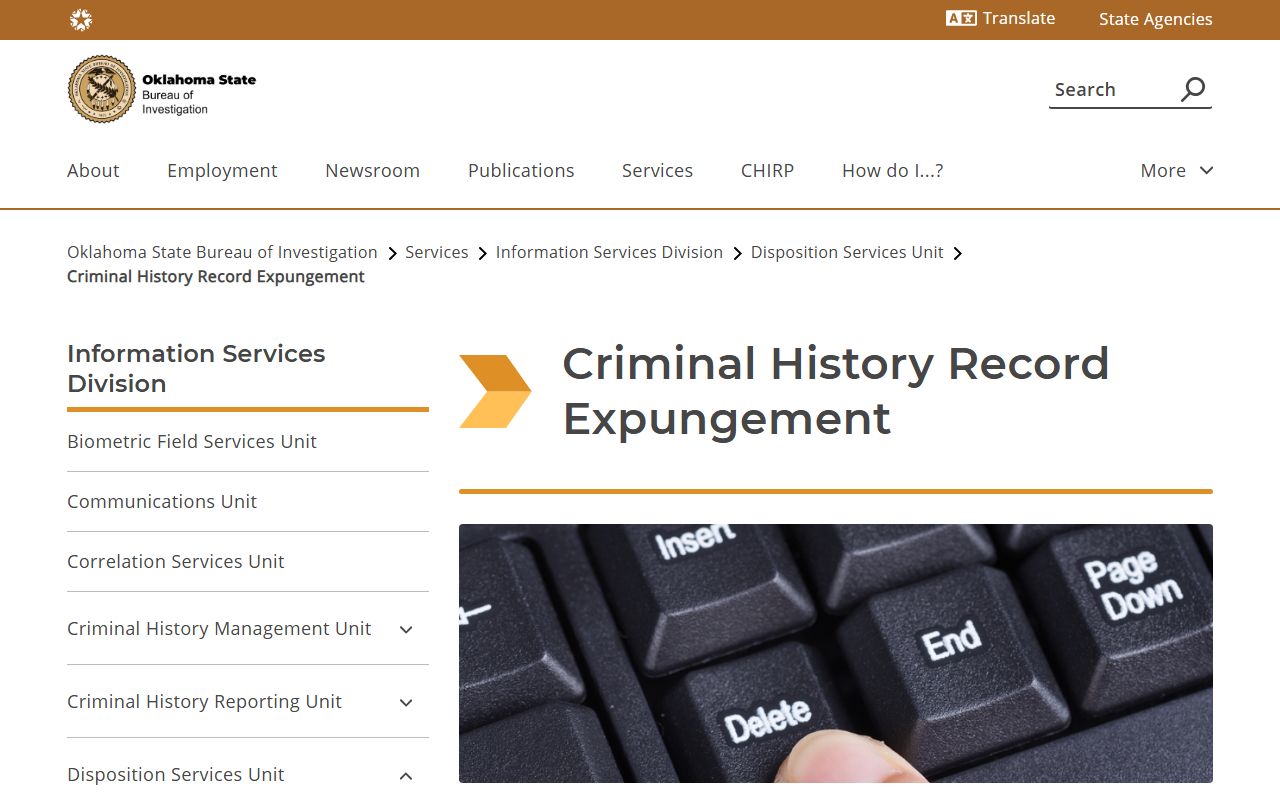
OSBI stresses that it cannot pre-approve who qualifies, so the petition runs through the court where the case was filed. Paying a fine or finishing probation does not erase a record by itself. The person must petition the court, give notice to the agencies involved, and win an order. Until that order is entered and processed, a deferred or dismissed charge can stay searchable.
| Sealed | Expunged | |
|---|---|---|
| Visibility | Hidden from public | Destroyed / treated as never existed |
| Law Enforcement | Limited access | Very limited |
| Eligibility | Set by Title 22 category; court order required | Narrower Title 22 category; court order required |
Public Access to Rogers County Criminal Records
Oklahoma treats court records as public unless a law or order says otherwise. The Open Records Act gives the public the right to inspect and copy records held by public bodies, and the courts are included. That is why most Rogers County criminal files are open to anyone. Sealed cases, juvenile matters, and protected identifiers are the main exceptions to that open rule.
Key Statutes:
Oklahoma Code § 51 (Open Records Act) - Public records are open for inspection and copying during business hours, unless a law makes them confidential.
Oklahoma Code § 22-18 - Sets which criminal records qualify for expungement and how a person petitions the court.
Background Check Considerations
A casual name search is not the same as a formal background check. Employers, landlords, and lenders who screen people must follow the federal Fair Credit Reporting Act. That law sets rules for accuracy, notice, and consent. A quick OSCN lookup carries none of those protections, and it may miss sealed or updated entries.
Important: This site is not an FCRA-regulated consumer reporting agency, and its records may not be used for employment, housing, credit, or other regulated screening.
Restricted Criminal Court Records in Rogers County
Some files sit outside public reach. Juvenile cases are closed by law, and only certain parties may view them. Sealed and expunged cases drop from ordinary search results. Adoption and mental health matters carry their own confidentiality. Even in open cases, the court redacts Social Security numbers, financial accounts, and the names of minors before the file reaches the public.
When a record is restricted, the Court Clerk can confirm what is available. A judge's order controls who may see a sealed file.